
On Fieldwork Teaching
Reflections on Teaching on the First Year Lake District Field Course

If you’ve ever studied geography, chances are you have memories of fieldwork; muddy boots, rain-soaked notebooks, and the occasional thrill of “learning in the wild.” Fieldwork is the cornerstone of geography. It takes many forms across the discipline, but at its heart, it’s about immersion. It’s about being in situ and being attentive to place.
Fieldwork is more than just a method. To understand it solely as an activity of measuring, gathering, or collecting data is to fundamentally misunderstand it. It’s also about thinking deeply, challenging first impressions, and pushing beyond the received wisdom of places we think we know. It’s intense, demanding, and often chaotic, and its lessons are more than just geographical. They stay with you for life.
My own experience of PhD research conducted while living in the Outer Hebrides for a year is testament to this. I learned not only about the warmth and hospitality of Outer Hebridean people, but also about myself. About my ability to find community in unfamiliar places; about my strength in overcoming challenges in the field; and about the perseverance and resilience needed to navigate the usual crises of confidence that come with making your own way in the world. Because of this, I truly believe that fieldwork is a life skill every geography graduate earns.
In many ways, fieldwork is fiercely meritocratic. Its success depends so much on your attitude to learning, and the effort you put in.
That’s why I love teaching on our compulsory first-year field course. Over three days of intensive teaching, ~120 students are introduced to the full breadth of studying geography ‘in the field’. They walk up hills and measure moraines. They visit Sellafield nuclear plant and contemplate industrial pasts. And they take on optional projects ranging from urban regeneration to flood risk. But more than that, they learn life skills.
A colleague once described the first-year field course as “the first-time students have to do something.” It wasn’t a swipe at other elements of our course. Rather, it reflected how, for the first time, students are fully independent and responsible for the choices they make. You can coast anonymously through much of your classroom study, but in the field, you simply can’t.
Slept in? You’ve missed breakfast.
Can’t find the briefing room? You’re now on the back-foot for the day’s goals.
Forgot to pack that (strongly suggested) warm coat? Unfortunately, you’ll be cold.
But it’s precisely because of fieldwork’s exposing nature that you learn one of life’s most valuable lessons: the value of effort and personal grit. You learn to appreciate that the most demanding days are often the most rewarding. You learn that things won’t always go to plan, but you develop the confidence to adapt when they go awry. You learn how teammates can enhance a task (or sometimes, how they don’t!). And most importantly, you learn the value and richness of deep immersion. It’s inherently risky, and often goes wrong, but through it, you learn how to learn.
Perhaps most noteworthy is the way students become transfixed in the field, by the field. They show up mentally as well as physically. Deep immersion demands sustained concentration and attentiveness. While even the best lectures and seminars are often interrupted by quick scrolls or notification glances, I’m always struck by how rarely field teaching competes with these distractions. Even the most seemingly unenthusiastic students find it hard to ignore surroundings they’ve never encountered before.
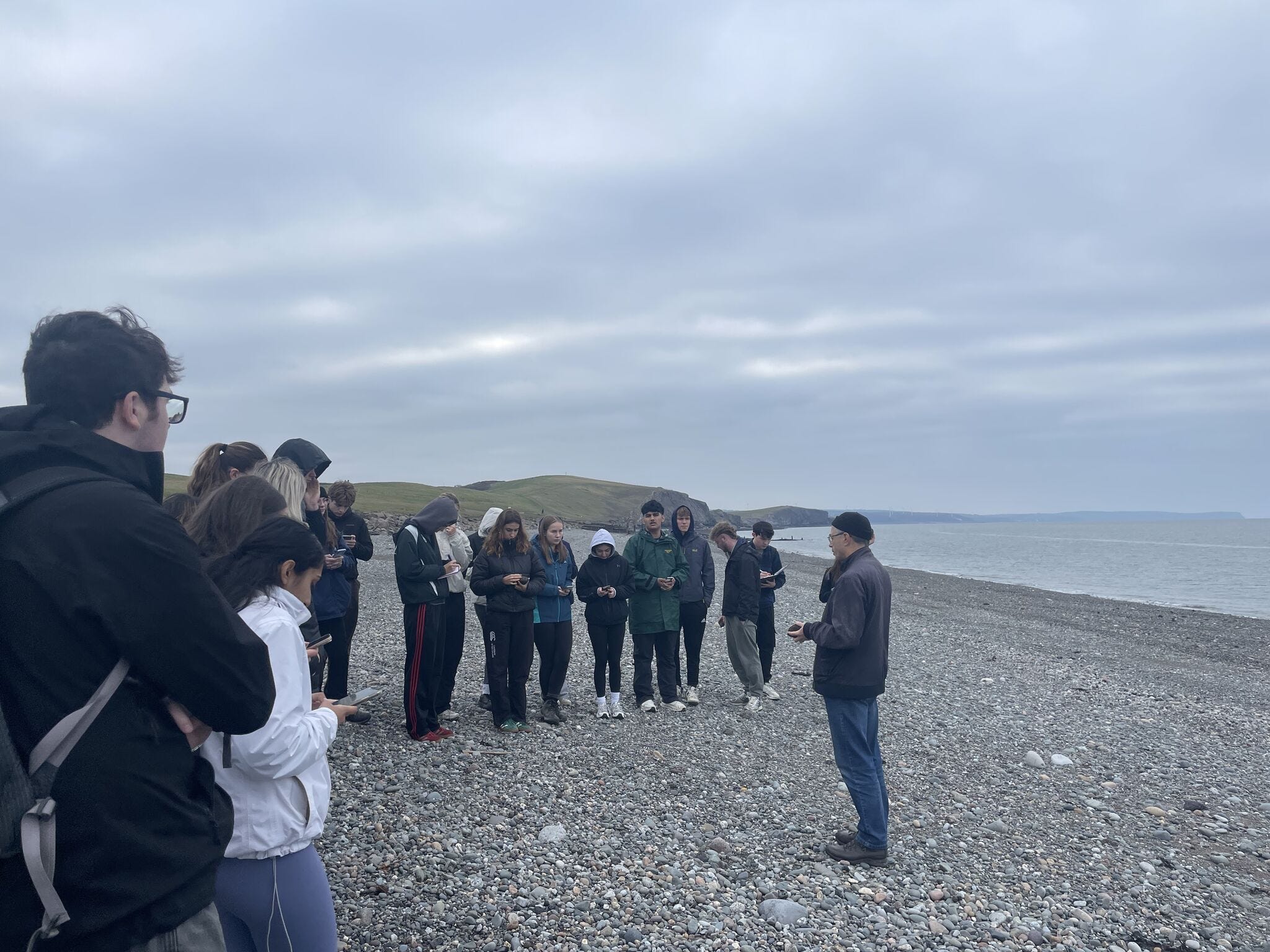
Beyond this, perhaps the greatest joy is seeing students, many of whom were nervous strangers upon arrival, return home as smiling, confident friends. It’s something they carry forward throughout their first year and beyond. This shared experience has truly become a cornerstone of community building within the School of Geography at Nottingham.
When teaching fieldwork, I’m always struck by the passion of my colleagues. I’ve been teaching on the field course for over five years—that’s 20 trips around Workington, Whitehaven, and Sellafield! But that pales in comparison to the experience of some of my colleagues: one has racked up more than ten years, and another a few more still. One even taught me on this very trip, when I was an undergraduate. Over time, they’ve developed a tacit wisdom of the field that’s genuinely inspirational. Their deep knowledge of the communities and places we explore is humbling, and to be honest, incredibly motivating both as a teaching colleague, as well as for students! They take fieldwork seriously, and students, in turn, do the same.
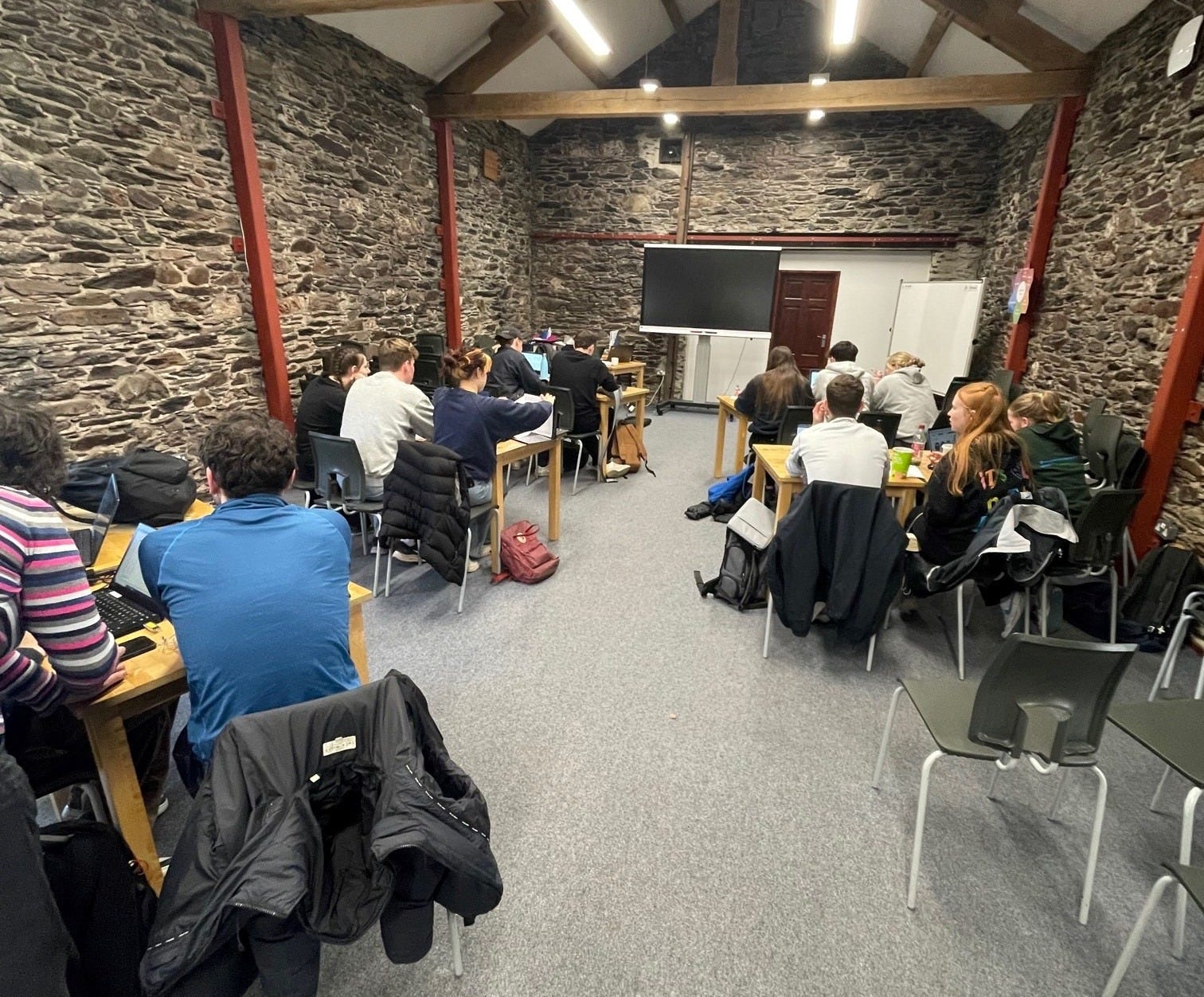
So much of field teaching is about the vibe. The practicalities of a week-long, intensive teaching trip with 120 students, all housed in a single field centre in the Lake District, rely entirely on strong teamwork. And to be completely honest- it’s not easy. It’s a fragile ecosystem that places real demands on staff. You not only need to be competent and confident in your subject matter, but you also have to get along with each other to make it work.
Alongside the teaching intensity, there’s the added layer of constantly interacting with colleagues, from dawn til dusk! That’s hard when you’re tired, enduring long days, or missing home. When team dynamics are off, it can feel like a very long week. But when the team gels, the week flies by.
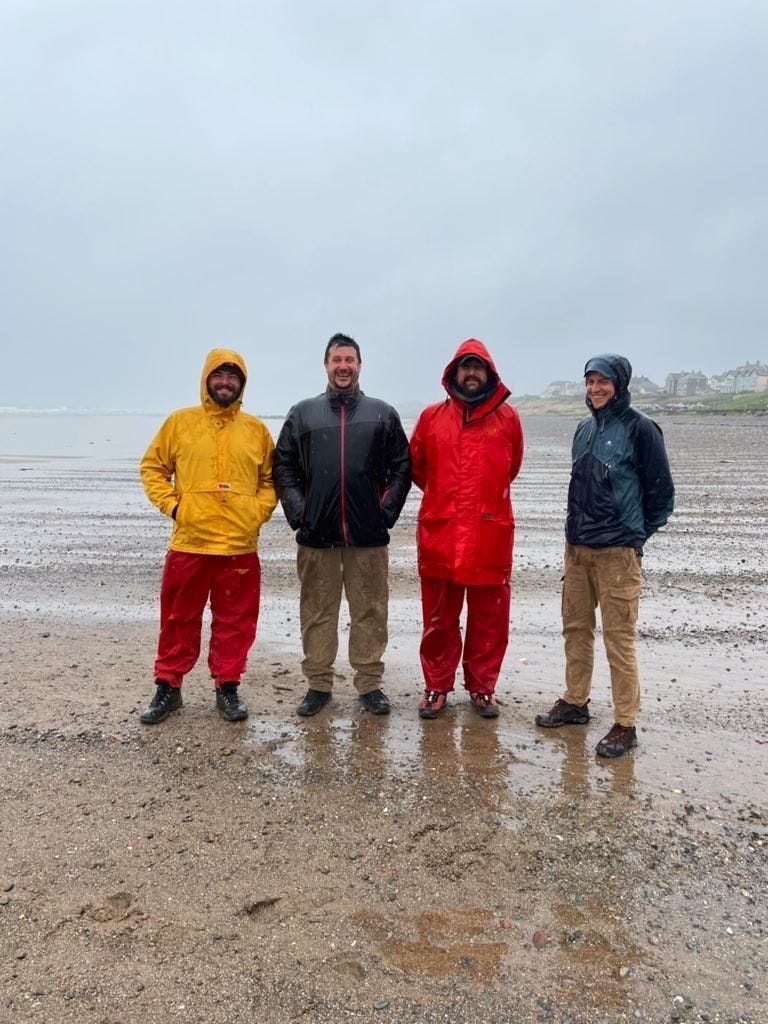
And while our team is exemplary, and I genuinely love teaching fieldwork, I’ll be honest, there are moments (standing cold, in the rain!) when I’d rather be at home. It’s easy to understand why colleagues can see field teaching as burdensome. We rightly celebrate fieldwork as central to geography, but the reality is it’s hard to get people to sign up. It requires time away from family and responsibilities, demands high-intensity teaching, and involves working in changeable environments that carry added risks and unpredictability. It’s no small ask. Given the choice, it’s easy to see why some might pass.
In response, our School has, for the past few years, offered a shadowing opportunity for colleagues new to fieldwork. It’s a chance to experience the trip without the pressure of teaching. And it’s been remarkably effective. It allows staff to appreciate the effort that goes into field teaching, while also giving them space to imagine how they might contribute in the future. It’s been a brilliant exercise in capacity building; one I believe will pay real dividends in the future.
But it also makes me reflect on the broader culture around fieldwork teaching. We need to shift the mindset from seeing it as a “rite of passage” for junior staff, to recognising it as a distinct pedagogy of excellence in its own right. As the careers of my esteemed colleagues remind me, there is immense value in sustained (re)engagement with a region over time. There’s a richness that comes from years of accumulated, tacit experience, and that’s something that only deepens with time.
Good field work teaching is of course about teaching geography; and with that of course comes a smattering of obscure facts you need to learn, like when industry changed, or how glaciation changed the environment, but its so much more about bringing place to life and showcasing life in place. It’s geographical storytelling 101. That doesn’t come only through reading textbooks or signposting well-selected readings; it more often comes from the relationships and memories which we actively sustain through doing the field course. It comes from the genuinely warm hugs and welcome back received from our project partners; it comes from the special accommodations of the field centre, which testament to our great working relationship with them over time; it comes from the year-on-year library of old, crumpled teaching notes we’ve made, and kept throughout the years. And it comes from the living memories of colleagues who have carefully honed their field teaching ‘pedagogy’ often without even knowing it!
That temporal maturity of knowledge is, I believe, what fieldwork teaching is truly all about.
As the sector desperately scratches around for efficiencies, fieldwork teaching often feels ripe for the chop. It’s expensive, and its value doesn’t easily show up on a spreadsheet. For decision-makers outside the discipline, its benefits can be hard to quantify. How do you measure the intangible things – so much of which what makes fieldwork meaningful and transformative!
Perhaps that’s why, in recent years, institutions have attempted to justify fieldwork by redrafting its scope to be more “budget-friendly”, both to satisfy university accountants, but more importantly to make trips more affordable and accessible for students. But as the sector continues to struggle with solvency, and as efficiency savings begin to bite, it’s more important than ever that we defend fieldwork teaching with both confidence and ferocity.
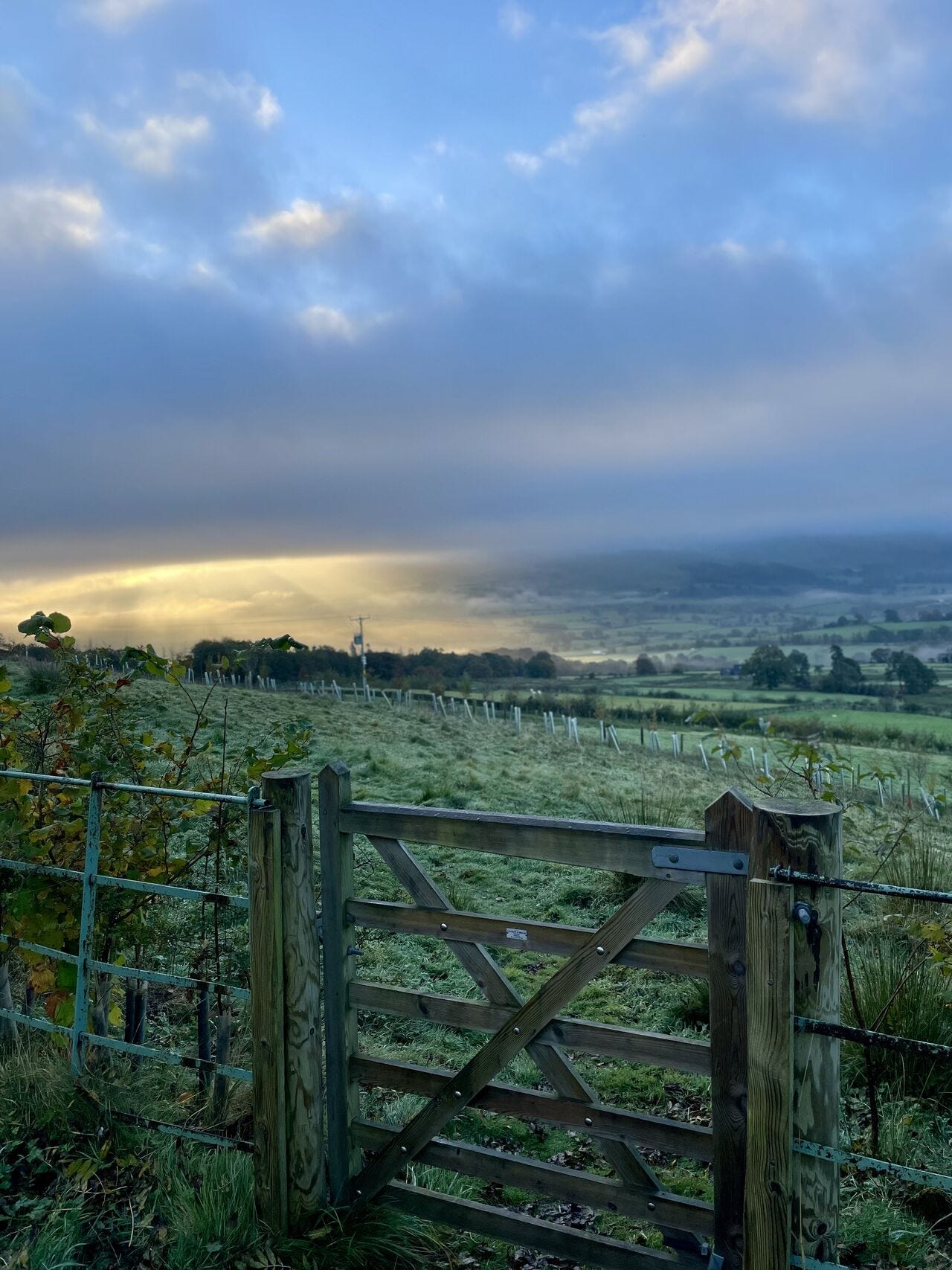
Fieldwork is not a “nice to have.” It never has been. It’s an essential pedagogical endeavour and foundational to the discipline of geography.
And perhaps only when we start to recognise and value fieldwork teaching, as a distinct practice of pedagogical excellence, will we be able to defend it in the way it deserves.